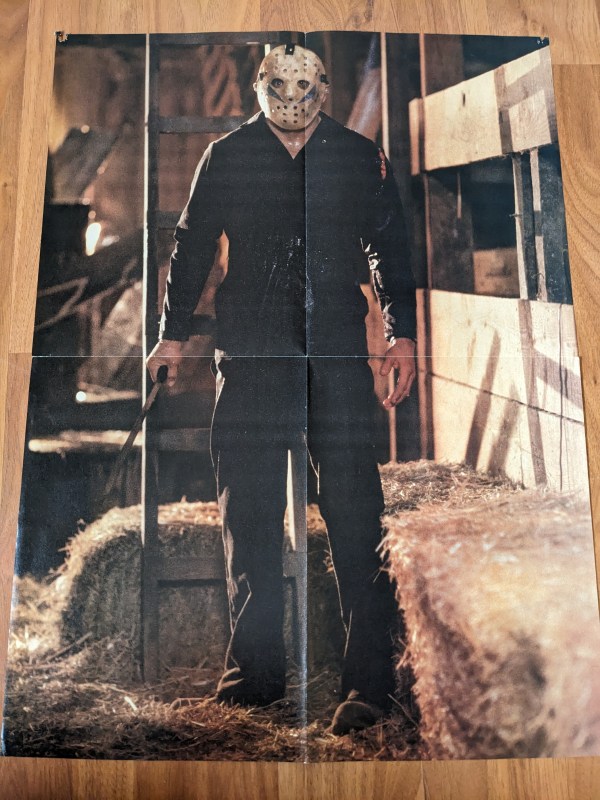
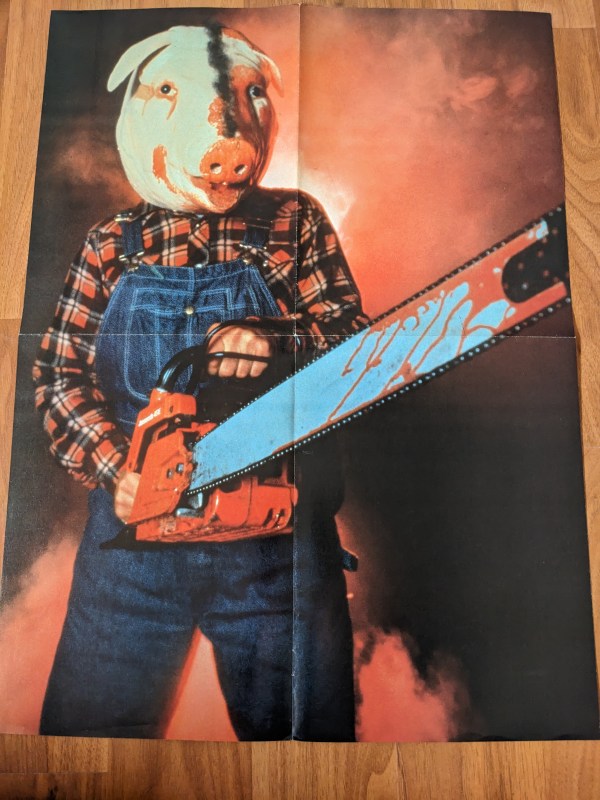
“But it’s not really Jason, so we don’t like this one!” Yeah, whatever.
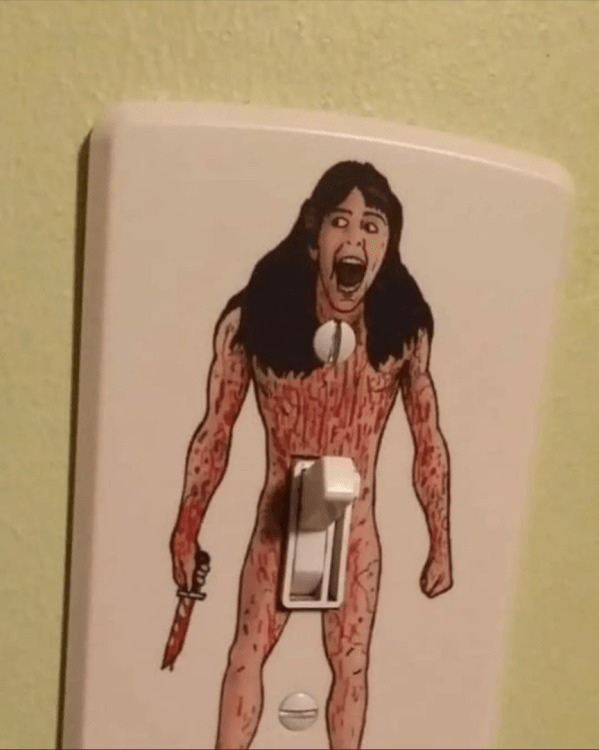
Look, I know it’s not a great film, but Demon and his enchiladas alone are worth the price of admission. See it again, preferably drunk or stoned. Maybe both.
Remembered mostly for one landmark film, Tobe Hooper still became one of the most emulated directors in the history of motion pictures.
I’m a sucker for numbers, statistics, and the like. I have a spreadsheet of over 800 horror films I’ve given one-line reviews. On a regular basis, it informs me of titles worthy of a re-watch and, just as importantly, keeps me from re-watching those odious pieces of cinematic shit I never want to see ever again.
For curiosity’s sake, this list is forever being sorted, cross-referenced, and ‘rejiggered’ (technical term!). I can see just how many horror films were out in 1981, which year had the most sequels, or the average number of titles I see each year.
During a recent slice and dice of this spreadsheet, I looked at a list I had compiled of my top 40 favorite horror films of all time. Like the rest of the list, I’m constantly bumping worthy items up the ranking while sadly demoting things that no longer have the sparkle they once did. In the midst of a recent shuffle, I noticed only one horror director had three entries on my top 40 list.
Willard Tobe Hooper was born and raised in Texas, attending UT Austin before venturing into the world of teaching. He later started making documentaries and threw together his first feature, EGGSHELLS, an otherworldly take on the late 60s counterculture, for less than $50,000. Though the micro-budgeted feature didn’t exactly make waves, it was tinged with a subversive commentary on political and societal mores that would bleed (and how!) into Hooper next film, THE TEXAS CHAIN SAW MASSACRE.
Though Hooper’s career courted controversy at almost every turn–from the did-he-or-didn’t-he-direct POLTERGEIST debate to the floundering multi-picture deal with Cannon Films that signaled the downturn of his career–nothing he made afterward ever had the impact of CHAIN SAW.
Christ, there’s nothing I can say about the film that hasn’t already been debated for the past 50 years. The movie has become not only a horror landmark, but a cultural touchstone. For fuck’s sake, they sell stuffed Leatherface dollsin Walmart these days! If that isn’t an indication of influence, I don’t know what is. Almost every film Rob Zombie has ever made has been a tribute to Hooper’s classic, and he ain’t the only one. Stanley Kubrick went on record as a fan of the film, and directors as diverse as Wes Craven and Ridley Scott have cited its influence.
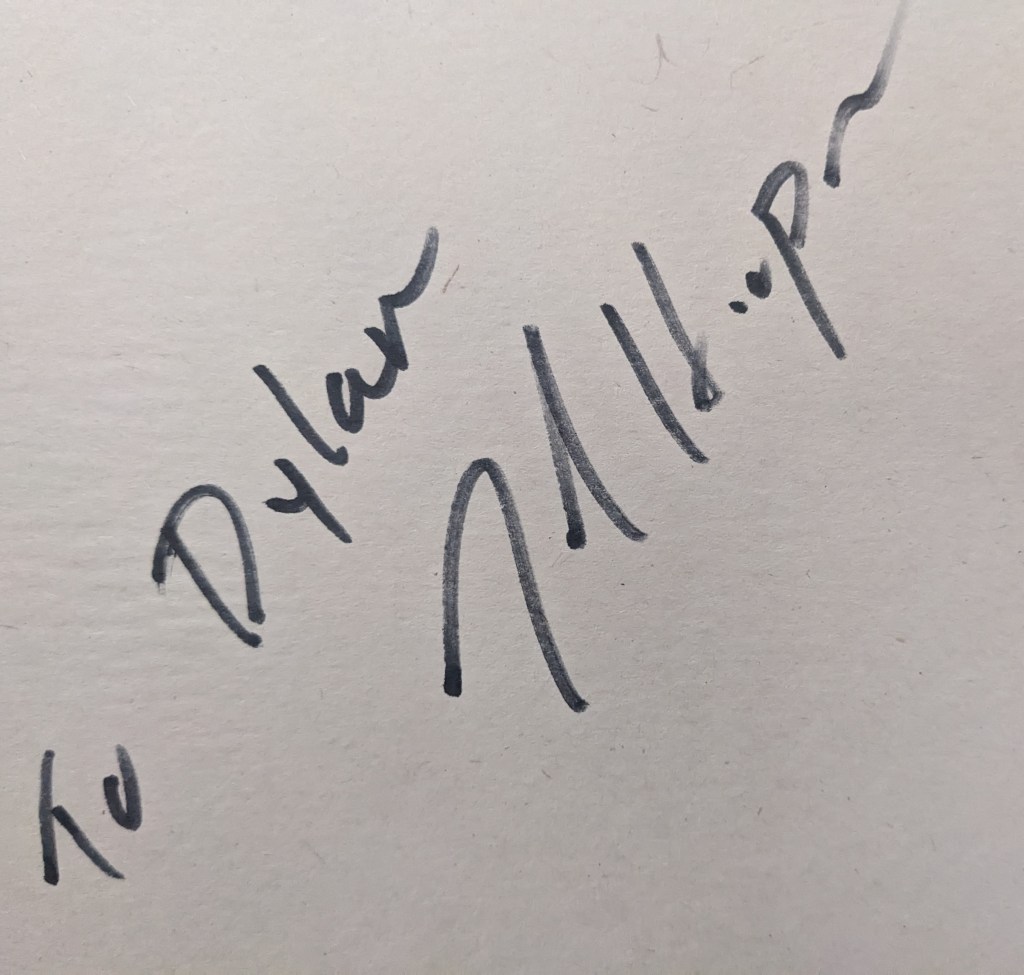
As a teenager, I met Hooper very quickly in the late 1980s. He was being mobbed by a crowd of fans I was part of, and his demeanor emanated an air of jarring discomfort, possibly even terror. Even then at my young age, I had heard the rumors of the usually mild-mannered Hooper having a nervous breakdown a few years earlier. As I watched him sign autographs as fast as humanly possible while trying to keep his composure, I couldn’t help feeling sorry for him. Sure, he was a wealthy, respected, and talented filmmaker, but Tobe Hooper seemed to be a victim of expectation, and THE TEXAS CHAIN SAW MASSACRE set the bar incredibly high for him for the rest of his life. Nothing could compete. It was a shooting star that burned Hooper every time he tried to let go of it and move on to something different.
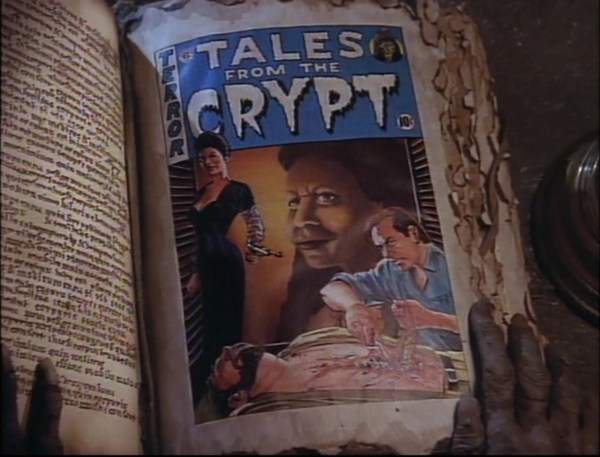
In the end, though, Hooper should be remembered for more than THE TEXAS CHAIN SAW MASSACRE. The sleazy authenticity of THE FUNHOUSE is one of the director’s unsung gems, and whether he or Spielberg had their hand on the throttle of POLTERGEIST is ultimately a moot point, as there’s no denying the cigar-chomping Hooper had significant influence on the film. His leaner later years at least produced some interesting small-screen entertainment. This included episodes of TALES FROM THE CRYPT and MASTERS OF HORROR, but, most importantly, his lone foray into music videos yielded a mini-masterpiece: Billy Idol’s “Dancing With Myself”. Go check it again and see if you can spot Leatherface’s sledgehammer in it!
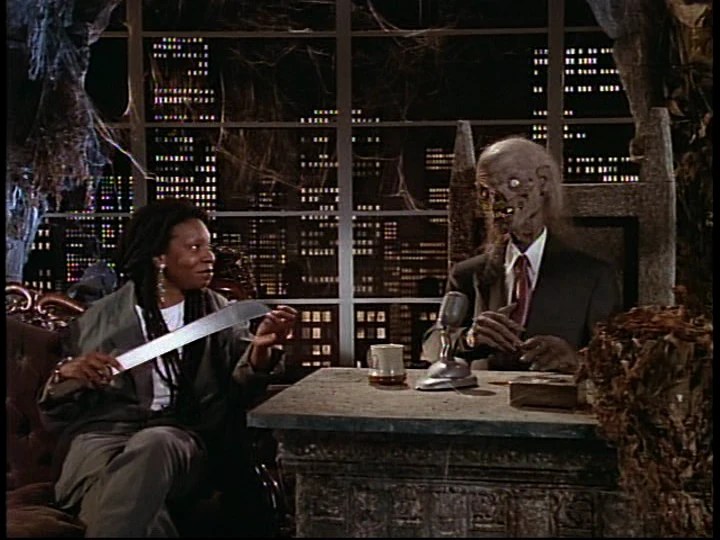
Though everyone here has done better work, the Crypt Keeper agrees: it’s “must-scream TV”!
We’ll start this one with a confession: A few years ago, I rewatched every single episode of TALES FROM THE CRYPT, and you know what? I realized I didn’t like it as much as I thought.
I know you can only do so much with a story in 25 minutes, but the scripts seemed routinely underdeveloped to the point it hamstrung most of the fun for me. Not only that, but I’m disappointed we never got a fun nickname for the Crypt Keeper. (C.K.? Cryptee? Keepie?) Warts and all, the series still barfed up a few frothy, bloody bon-bons that have since risen like clotted cream to the top of the body pit.
First up is possibly the best thing Tobe Hooper did after POLTERGEIST (1982). I realize that sounds like I’m selling the Texas-born scaremaker short, but much like Argento and Romero, Hooper was living proof that what comes up must come back down again. Though his direction here isn’t exactly groundbreaking, he wrangles a surprisingly fine cast of principles, including James Remar, John-Rhys Davies, Vanity, and Whoopi Goldberg, fresh off her Oscar win for GHOST (1990). I mean, with that kinda lineup, how can you resist?
Red Buckley (Remar) is just a small-time thug trying to prove his mettle. When he finds out a priceless black pearl is being hoarded by ailing plantation owner, Emil Duval (fucking hell, how many accents can Rhys-Davies do??), we know we’re in for double-crosses galore. Another thing Red’s interested in getting his hands on is Duval’s wife, blithely played by the ever-beautiful Vanity. Sorry, but it’s been over 40 years now and I’m still wondering what PURPLE RAIN would have been like had she stayed onboard. Anyway, all this sweaty intrigue is set against the noisy chaos of impending civil war, which always serves as a convenient–albeit desperate–way to inject urgency into a plot. A tinge of voodoo is thrown in when Goldberg puts herself in the middle of this fuckery as an enigmatic (or maybe just underwritten?) priestess who may or not want a cut of Red’s booty in exchange for a little spiritual protection.
I won’t divulge much more, except that the intended highlight of the episode may as well come with a neon sign attached to it. TALES FROM THE CRYPT was never exactly subtle, so let’s just say it plays out much like a reality-TV adaption of the board game “Operation”. The whole thing unwinds in the gaudy, gory fashion HBO’s original programming became famous for in later years. (I’m looking at you, GAME OF THRONES!)
Check your head at the door and you’ll find this thing flies by in roughly the same time it always took TALES FROM THE CRYPT to get through its opening credits. It’s quite possible the real reason I missed a lot of these episodes during their initial run is because I fell asleep before Keepie could pop his bony ass out of that frickin’ coffin and get this show on the road.
But hell, I’m willing to bet there’s nothing on cable tonight that’s as messy and trashy as “Dead Wait”, and even if there is, does it include an Oscar winner, that detective from DRUGSTORE COWBOY, the chick that used to bang Prince, and that beardy Welsh bloke who played both Sallah and Gimli the Dwarf?… I didn’t think so!
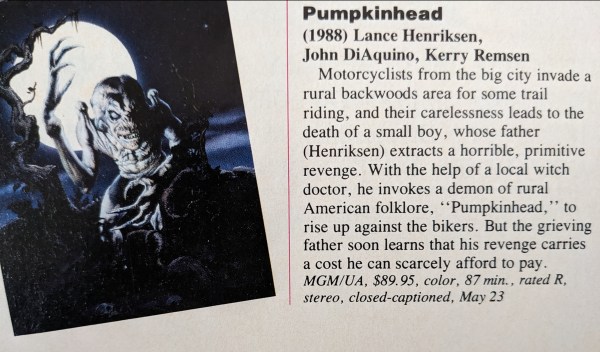
Just a little PUMPKINHEAD action for ya today. This goes back to its first video release in the spring of 1989. Ah, dig those crazy VHS prices–$89.95, damn!
You know, when you think about it, Stan Winston’s directorial debut is basically just a spin on “Pet Sematary”, only with a nine-foot demon thrown in for good measure. And I still like the way that witchy lady says “Ehhd Hahhrrrley“.
We haven’t had much yet here on UBHB highlighting horror’s latest kooky clown, so it’s time to remedy that!
The people at JoBlo are always down with the horror cause, and I recently came across a great article of theirs detailing all the stuff you need to know so far about Art the Clown’s upcoming Christmas festivities. We’re talkin’ lots of info about the main characters of the film, as well as director Damien Leone’s efforts to get the latest sequel’s running time under two hours (thank fuck for that!). Leone also mentions wanting to recapture the creepiness Art had in the original film.
Check out all the details, as well as the festive teaser trailer here!
Sometimes a nutzo, damn-the-torpedoes approach can serve a film well.
The kitchen sink. A bag of chips. The whole nine yards. There are so many ways to imply someone has gone extra lengths to push the envelope and achieve fine results.
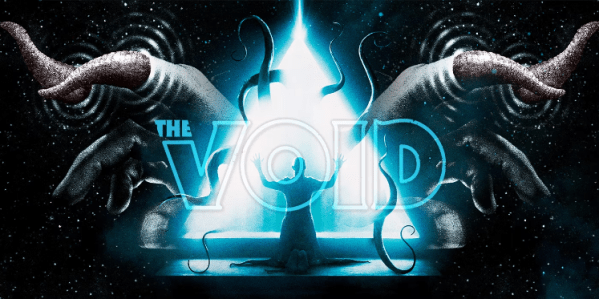
In 2017, I saw only two genre films brazenly cross that proverbial line in the cinematic sand. The first was Julia Ducournau’s vegetarian takedown, RAW; the other was that slimy, tentacled throwback from Canada, THE VOID.
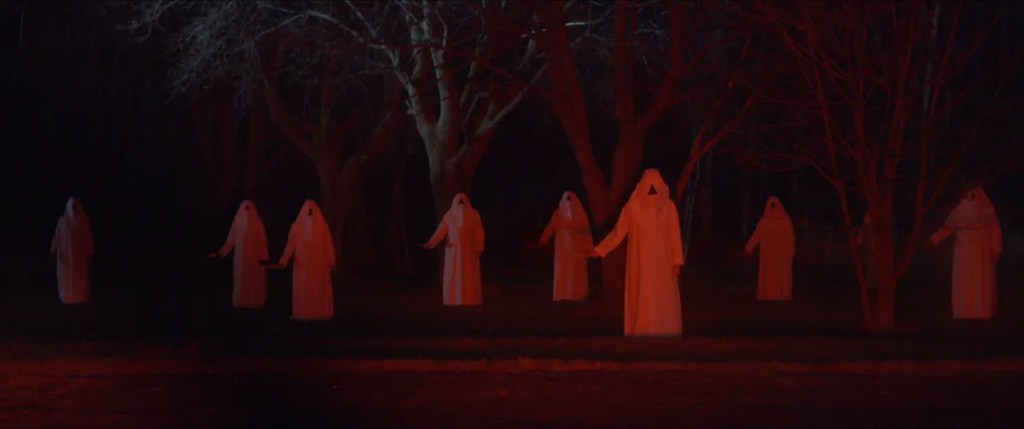
Leveraging a meager, crowdfunded budget for their practical effects, directors Jeremy Gillespie and Steven Kostanski painfully cobbled the film together in Sault Ste. Marie, Ontario as a loving tribute to horror flicks of yesteryear. Nods to Carpenter, Lovecraft, Barker, and other scare masters litter the landscape where white-cloaked cultists move in on a closing medical facility. The bigger problem for the local yokels trapped inside is that there’s something even worse waiting for them in the basement.
There can be a perverse thrill in watching a film throw caution to the wind and go five miles farther down Batshit Boulevard than you were expecting. Like MANDY, TERRIFIER 2, or, hell, even THE BANANA SPLITS MOVIE, THE VOID may not please everyone, but it earns its keep simply for trying to smash through the genre’s glass ceiling.
It doesn’t make a lick of sense, and to say the filmmakers overextend themselves is a bit of an understatement, but if you pit THE VOID against most any other low-budget horror offering from the 2010s, you’ll find, pound for pound, it punches above its class all the way to its bitter, Fulci-inspired end. And what an ending it is. Without spoiling it, I’ll just say it’s second only to Karyn Kusama’s final shot in THE INVITATION for achieving the awe-inspiring, feel-bad ending of its era.
Directors Gillespie and Kostanski have since gone on to contribute to the LEPRECHAUN and V/H/S franchises, but if it’s cheap, retro thrills you crave, THE VOID picks up right where Vestron Video left off.
Anyone remember prism stickers? I had a neighborhood discount store with a vending machine full of these in the late 1980s. I must have dumped a small fortune into that thing in a quest to get my favorite horror films. In the following years, I unwisely gave away or even threw away a few I didn’t care for. Ah, the folly of youth — D’OH!
Though they vary in artistic quality, the ones I still have are in primo condition, and from time to time I’ll be posting one here on UBHB.
First up is a grrrreat one of John Carpenter’s THEY LIVE (1988).
An ideal primer for your introduction to short horror fiction.
It makes sense to debut this section with the first Stephen King book I purchased. It was late 1984 and Christmas shopping was in full swing at the Richland Mall in Johnstown, Pennsylvania. At ten years old, I was too old to go piss on Santa’s lap but too young to have any money for seasonal sales at the local K-Mart. Instead, I was happiest to hang around the arcades, movie theaters, and book shops where the cheapest thrills abounded.
I had, unfortunately, missed the theatrical run of CHILDREN OF THE CORN earlier that year, but was intrigued when I saw its awesome poster artwork fronting the newest printing of Stephen King’s NIGHT SHIFT. As a fledgling horror vulture, I had previously noticed the book’s famous “gauze hand” cover haunting store shelves. Wanting to know what the big deal was about this King guy, I opted to take a chance, plunking down my $3.95 for him and the fine folks at Waldenbooks to divvy up.
It ended up being one of the smartest purchases I made in my youth.
NIGHT SHIFT is a mad conglomeration of King’s earliest stories, penned for such publications as Cavalier, Penthouse, and Cosmopolitan between 1968 and 1977. The tone of the book changes wildly from time to time–if its stories were instead a compilation of rock ‘n’ roll songs, it would make a killer K-Tel album. (“It’s the original hits by the original artists–take a listen!”) Encompassing the stark terror of the horror genre, the fantastic and grim leanings of science fiction, and even the lugubrious regret found in some of the best dramatic works, NIGHT SHIFT plunders each shade of grey as its players search for an exit from the narrowing, twisting corners of the mind.
I am hard pressed to think of another short story collection that gave birth to so many film, television, and even podcast adaptations. Two stories here, “The Ledge” and “Quitters, Inc.”, later formed the backbone of CAT’S EYE (1986), while a number of other studio releases alike took a shot at stories such as “Graveyard Shift”, “The Mangler”, and “The Boogeyman”. “Children of the Corn” is much nastier stuff here; Peter Horton and Linda Hamilton should be grateful for getting off light. Even King’s own directorial debut, MAXIMUM OVERDRIVE (1986), was expanded from “Trucks”, in which the world surrenders to a rise of machines over mankind.
All this unsavoryness–men turning into jelly, murderous gardeners, extraterrestrial body horror, and much, much more–is a perfect scratch for your horror itch. The nutty and grotesque creative approach grabs your attention, but it’s thankfully disciplined enough to sustain each entry without wearing out its welcome. As a result, NIGHT SHIFT still ranks at the very top of my favorite King releases.
When all’s bled and done, it’s a curiously heartfelt story that proves the collection’s true versatility. “The Last Rung on the Ladder” downshifts just long enough to offer a devastating recount of an ambitious lawyer who has become too busy to come to the aid of his little sister, who has spent most of her adult life in a downward spiral of bad life decisions. For once, King goes for the heart instead of trying to tear it out of your chest. It pays off in a very sad but strong character study that showcases what ultimately has become the author’s greatest strength–exposing the darkness that lies inside every Jane and John Q. Public. I also found it fascinating that “The Rung on the Ladder” is one of the only stories in NIGHT SHIFT to never be translated to some form of media. Maybe someday, I’ll be the one to do it.